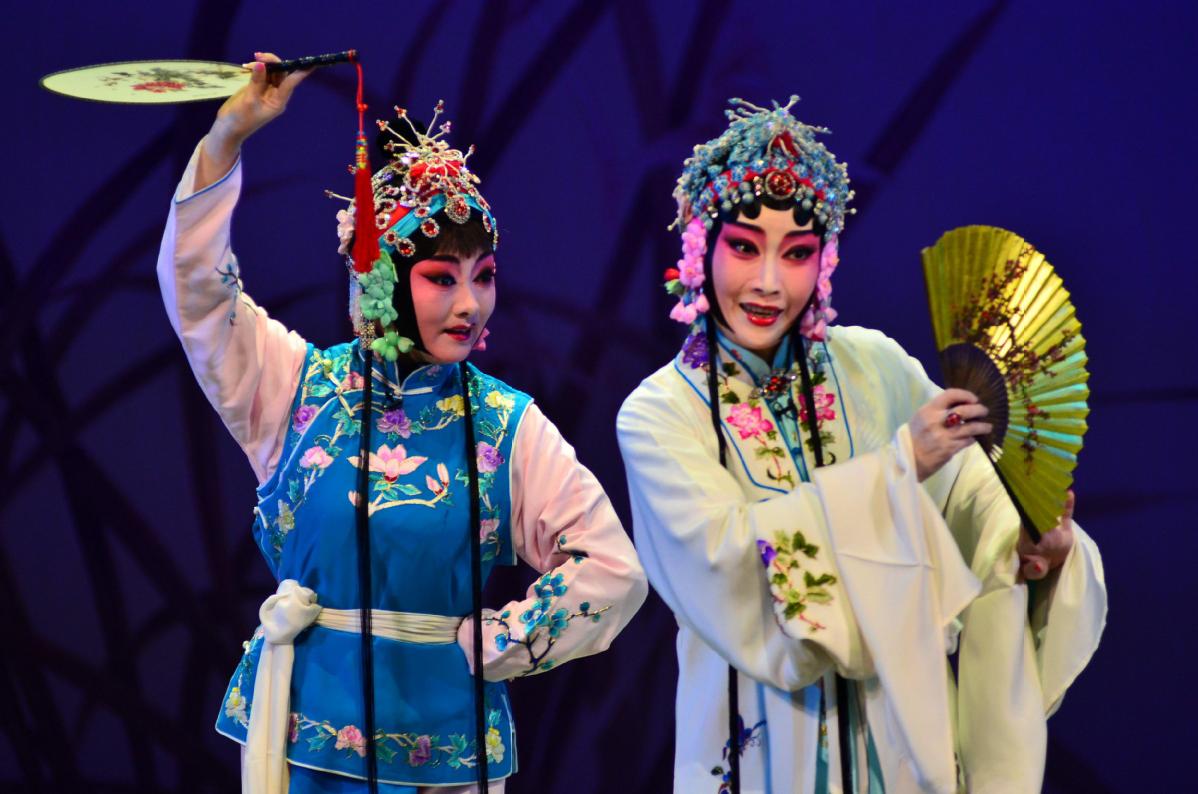
This very famous story of star-crossed lovers is the tale behind the Chinese Qixi Festival, sometimes called Chinese Valentine’s Day. In this story, a young mortal man ends up married to an immortal fairy, but is prevented from being with her due to the interference of the gods.
This is a longer text than I normally put up for beginners, but if you’re in the upper beginner spectrum, you should be able to sort it out. Please do leave comments on any particular parts that are difficult!
Key vocab
织女 – zhīnǚ – weaver girl
仙女 – xiānnǚ – fairy maiden
善良 – shànliáng – kind, kindhearted
织布 – zhībù – to weave cloth
王母娘娘 – wángmǔniángniáng – Queen Mother of Heaven
银河 – yínhé – Milky Way
喜鹊 – xǐquè – magpie
七夕 – qīxī – Qixi Festival (Chinese Valentine’s Day)
发簪 – fàzān – hairpin
牛郎织女
很久很久以前,有一个年轻人叫牛郎。他没有爸爸妈妈,只有一头老牛和他住在一起。牛郎每天工作,生活很辛苦,但是他很善良。
有一天,老牛对牛郎说:”明天,有几个仙女会来河边洗澡。你去拿走那件红色的衣服。”牛郎觉得很奇怪,但是他听了老牛的话。
第二天,牛郎去了河边。他看到几个非常漂亮的仙女在河里玩水。他悄悄地拿走了一件红色的衣服。仙女们要回天上去的时候,其中一个仙女找不到自己的衣服。她叫织女,是天上最会织布的仙女。
织女很着急,不知道怎么办。这时候,牛郎走出来,把衣服还给了她。织女看到牛郎,觉得他很善良,也很喜欢他。织女决定不回天上了,她要和牛郎住在一起。
牛郎和织女结婚了,生活很幸福。牛郎每天工作,织女每天织布。
但是,天上的王母娘娘知道了这件事。她非常生气,因为织女是仙女,不可以嫁给人间的人。王母娘娘派人下来,把织女带回了天上。
牛郎看到妻子被带走了,非常伤心。这时候,老牛说:”我死了以后,你用我的皮做鞋子,穿上就可以飞到天上去。”不久,老牛死了。牛郎很伤心,但是他记住了老牛的话。
牛郎用老牛的皮做了鞋子,穿上以后,他飞上了天。他越飞越快,马上就要追上织女了。但是,王母娘娘看到了,她拔下头上的发簪,在天上画了一条长长的河。这条河叫银河,又宽又深。
牛郎站在银河的一边,织女站在另一边。他们只能看着对方,不能在一起。织女哭了,牛郎也哭了。
后来,天上所有的喜鹊都很同情他们。每年七月七日,喜鹊们飞到银河上,用身体搭成一座桥。牛郎和织女可以走过这座桥,见面一次。
所以,每年七月七日,中国人叫这一天”七夕“。这是中国的情人节。人们说,这一天如果下雨,那是因为牛郎和织女又要分开了,他们在哭泣。
The Cowherd and the Weaver Girl
A long, long time ago, there was a young man called Niulang (the Cowherd). He had no father or mother, and only lived with an old ox. Niulang worked every day, and life was very hard, but he was very kind.
One day, the old ox said to Niulang: ‘Tomorrow, some fairy maidens will come to bathe by the river [and they will take off their clothes while bathing]. Go to the river and steal the red clothes.’ Niulang thought this was very strange, but he listened to the old ox’s words.
The next day, Niulang went to the riverside. He saw several very beautiful fairy maidens playing in the water. He quietly took a red garment [from the riverbank]. When the fairy maidens wanted to return to heaven, one of them couldn’t find her clothes. Her name was Zhinü (the Weaver Girl), and she was the best weaver among all the fairies in heaven.
Zhinü was very anxious and didn’t know what to do. At that moment, Niulang came out and returned the clothes to her. When Zhinü saw Niulang, she thought he was very kind, and she also liked him very much. Zhinü decided not to return to heaven – she wanted to live together with Niulang.
Niulang and Zhinü got married, and their life was very happy. Niulang worked every day, and Zhinü wove cloth every day.
However, the Queen Mother of Heaven found out about this. She was very angry, because Zhinü was a fairy maiden and was not allowed to marry a mortal. The Queen Mother sent someone down to bring Zhinü back to heaven.
When Niulang saw his wife being taken away, he was extremely sad. At that moment, the old ox said: ‘After I die, use my hide to make shoes. If you wear them, you can fly up to heaven.’ Soon after, the old ox died. Niulang was very sad, but he remembered the old ox’s words.
Niulang used the old ox’s hide to make shoes. After putting them on, he flew up to heaven. He flew faster and faster, and was about to catch up with Zhinü. But the Queen Mother saw this, and she pulled out the hairpin from her head and drew a long river across the sky. This river is called the Milky Way, and it is both wide and deep.
Niulang stood on one side of the Milky Way, and Zhinü stood on the other side. They could only look at each other but could not be together. Zhinü cried, and Niulang also cried.
Later, all the magpies in heaven felt great sympathy for them. Every year on the seventh day of the seventh month, the magpies fly to the Milky Way and use their bodies to form a bridge. Niulang and Zhinü can walk across this bridge and meet once, [only on this day].
Therefore, every year on the seventh day of the seventh month, Chinese people call this day ‘Qixi.’ This is China’s Valentine’s Day. People say that if it rains on this day, it is because Niulang and Zhinü know they must separate again, and they are weeping.