
Meet Xu Wei, a Ming Dynasty artist whose life was filled with madness, murder, and misery – yet somehow he became one of China’s most influential painters, making artistic masters weep centuries later.
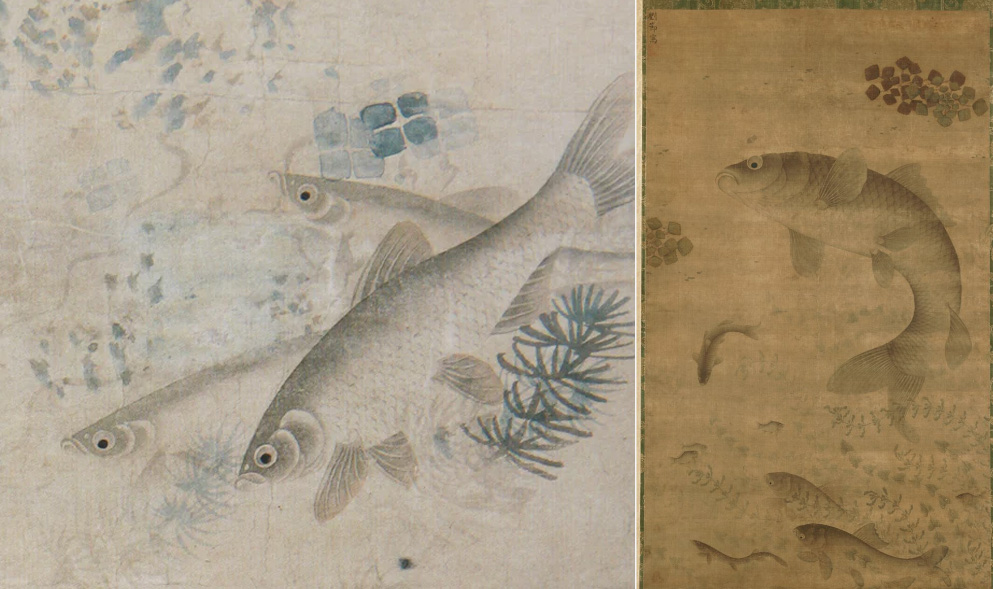
Before you dive into this retelling of his life, you might want to take a moment to look at Xu Wei’s art. His work is described as being wild and ungoverned compared to his contemporaries, but to the modern eye, it probably looks pretty boring and traditional. So, to give a sense of the difference between him and other artists of his day, I’ve got a little comparison here. First, a couple of typical fish paintings from the Ming Dynasty:
And now, Xu Wei’s fish painting:
Big difference. You can see that Xu Wei’s art is expressive and impressionistic, where other artists often leaned more towards realism. There are a few galleries of his other works online, you’re welcome to check them out.
Key vocab
幕僚 – mùliáo – personal advisor/staff member
牵连 – qiānlián – to implicate/to involve
精神崩溃 – jīngshén bēngkuì – mental breakdown
奔放 – bēnfàng – bold and unrestrained
凄凉 – qīliáng – bleak/desolate
书童 – shūtóng – book boy/study servant
画坛 – huàtán – painting circles/art world
传奇 – chuánqí – legend/legendary
徐渭是明朝的一位著名画家、诗人和剧作家。他1521年出生在浙江绍兴,从小就非常聪明,很有才华。但是他的一生充满了痛苦和不幸。
徐渭年轻的时候,非常希望通过科举考试,为国家做官。但是他一共考了八次,每次都失败了。在那个时代,科举考试对一个人的人生非常重要。考不上,就意味着没有地位,没有前途。这对徐渭打击很大。
后来,徐渭成为了一位有名的将军胡宗宪的幕僚,帮助他处理重要的事情。但是好景不长,胡宗宪后来被朝廷判罪处死。徐渭非常害怕自己也会受到牵连,精神开始出现问题。他的状态越来越差,最终精神崩溃。在那段最黑暗的时间里,他多次试图结束自己的生命,据说前后共尝试了九次。后来,他在精神失常的状态下杀死了自己的妻子,因此被关进监狱,一共坐了七年牢。
出狱以后,徐渭已经是一个老人了。他非常贫穷,生活十分艰难。但是他没有停止创作。他的画风非常独特,笔法自由奔放,充满感情,和当时其他画家的风格完全不同。他最喜欢画植物和蔬菜,比如葡萄、荷花、竹子。他的画看起来很随意,但是每一笔都充满力量和生命力。
徐渭晚年过得非常凄凉。他没有钱,没有家人,据说只有一只狗陪伴着他。他去世的时候,身边几乎什么都没有。
但是,他死后,人们慢慢开始认识到他的伟大。后来的画家郑板桥说,他愿意做徐渭的书童,只为了能够靠近这样的天才。二十世纪最伟大的画家之一齐白石说,他曾经因为徐渭的画而流泪,因为那些画实在太好了。
徐渭的一生充满了失败、痛苦和悲剧。但是他留下的艺术作品,影响了中国画坛几百年。有人说他像中国的梵高——在世的时候没有人真正理解他,死后却成为了永远的传奇。
Xu Wei was a famous painter, poet, and playwright of the Ming Dynasty. He was born in Shaoxing, Zhejiang Province in 1521. From a young age, he was extremely intelligent and talented. However, his life was filled with pain and misfortune.
When Xu Wei was young, he desperately hoped to pass the imperial examination and become a government official. But he took the exam a total of eight times, and failed every single time. In that era, the imperial examination was extremely important for a person’s life. Failing to pass meant having no status and no future. This was a huge blow to Xu Wei.
Later, Xu Wei became a personal advisor to a famous general named Hu Zongxian, helping him handle important matters. But good times don’t last forever. Hu Zongxian was later convicted and executed by the imperial court. Xu Wei was terrified that he would also be implicated, and his mental state began to deteriorate. His condition grew worse and worse, until he eventually had a mental breakdown. During that darkest period, he attempted to end his own life multiple times – reportedly a total of nine times. Later, in a state of mental illness, he killed his own wife. Because of this, he was thrown into prison and served seven years.
After his release from prison, Xu Wei was already an old man. He was extremely poor, and life was very difficult. But he never stopped creating art. His painting style was very unique – his brushwork was free and unrestrained, full of emotion, completely different from other painters of his time. He loved painting plants and vegetables, such as grapes, lotus flowers, and bamboo. His paintings looked casual, but every stroke was full of power and vitality.
Xu Wei’s later years were extremely bleak. He had no money, no family, and it is said that only a dog kept him company. When he died, he had almost nothing beside him.
However, after his death, people gradually began to recognize his greatness. The later painter Zheng Banqiao said he would be willing to serve as Xu Wei’s book boy, just to be close to such a genius. Qi Baishi, one of the greatest painters of the twentieth century, said he once cried because of Xu Wei’s paintings – they were simply too beautiful.
Xu Wei’s life was filled with failure, pain, and tragedy. But the artwork he left behind has influenced Chinese painting for hundreds of years. Some say he was like China’s Van Gogh – no one truly understood him while he was alive, but after death, he became an eternal legend.